
Rooster Run – Real Money Crash Casino Game in the UK
Rooster Run is a rapid-fire crash-style casino game where a single choice drives every round: take the cash-out now, or push forward for a bigger multiplier. Each successful jump boosts your potential return, but a slip ends the run instantly and wipes the stake.
On this page, UK players can learn how Rooster Run works, what the risk settings change, and what multiplier ranges you can realistically aim for across Low, Medium, and High Risk. You’ll also see what to look for in a UK-friendly casino, how autoplay works, and how to test the mechanics in a demo before playing with GBP (£) for real.

Where to Play Rooster Run in the UK
Picking the right casino matters as much as understanding the rules. Rooster Run is not guaranteed to appear everywhere, and the best experience comes from platforms that are clear about licensing, payouts, limits, and what happens if a round is interrupted.
A reliable Rooster Run casino for UK players should meet the following standards:
- Licensed and regulated, with visible operator details and responsible gambling tools.
- Accessible from Great Britain, with support for deposits and withdrawals in GBP (£).
- Demo support, so you can test risk levels and pacing without depositing.
- Trusted payment methods, with realistic withdrawal processing times.
- Mobile-friendly gameplay, running smoothly in-browser with touch controls.
- Clear terms and conditions, especially around limits, maximum payouts, and game interruptions.
When the casino is well-chosen, Rooster Run feels straightforward: quick loading, responsive controls, and clean cash-outs in GBP — without surprises hidden in the fine print.
What Is Rooster Run?
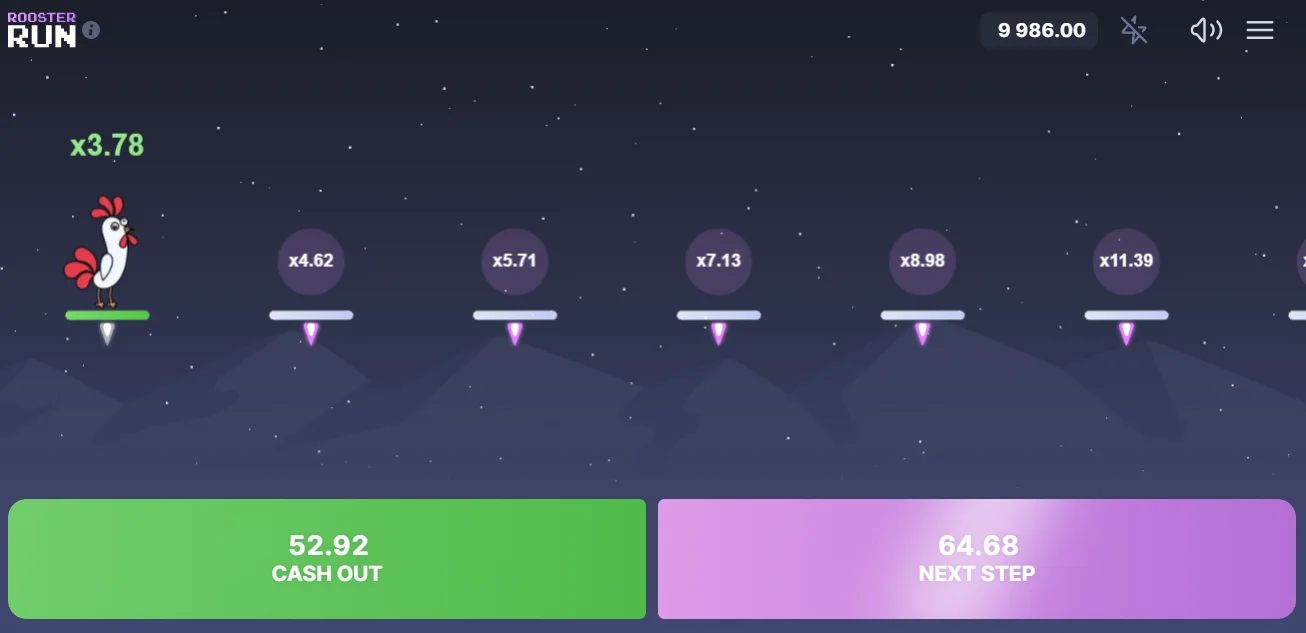
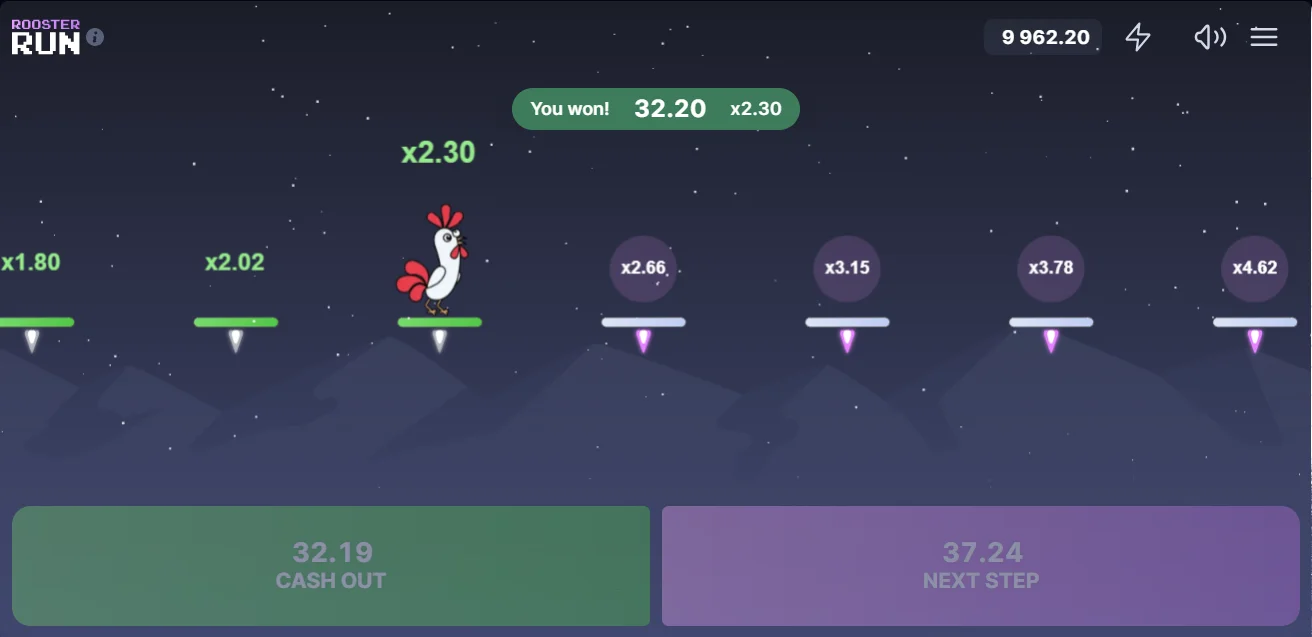
Rooster Run is an arcade-style crash game built around a simple, high-tension loop: you place a stake, the chicken advances platform by platform, and the multiplier climbs with every safe move. Your job is not to “win a spin” — it’s to decide when the current multiplier is good enough and cash out before the run collapses.
Unlike slots, Rooster Run has no reels, paylines, or bonus rounds. Everything is decision-driven. After you bet, you’re presented with two actions: move Forward to increase the multiplier, or Cash Out to lock in winnings. Staying in the round keeps your stake at risk, and a fall ends the round immediately.
The game’s personality comes from its risk settings. You can choose Low, Medium, or High Risk, which changes how many lines you’ll cross and how aggressive the multipliers become. Rounds are designed to be short and repeatable — ideal for quick mobile sessions or fast desktop play when you want instant outcomes.
For UK players, Rooster Run is typically found at online casinos that support GBP (£) play in-browser. Many sites also provide a demo version, letting you practise cash-out timing and compare risk levels before betting real money.
Rooster Run – Key Facts
- Game provider: Mascot Gaming
- Game type: Crash / arcade casino game
- RTP: 95%
- Volatility: Adjustable via risk settings
- Maximum multiplier: Up to x10,000 (High Risk)
- Maximum win: Usually capped by the casino (varies by operator)
- Bet range: From £0.01 up to £25
- Risk levels: Low, Medium, High
- Demo mode: Often available
- Real money play: Supported (GBP £ at UK-facing casinos)
- Platforms: Desktop & mobile (browser-based)
- Download required: No
How Rooster Run Works
Difficulty Levels & Risk System
Rooster Run is defined by its risk selector. Before each round, you choose Low, Medium, or High Risk — and that choice changes both the path length and the multiplier potential. In simple terms: higher risk means fewer lines, sharper jumps in value, and a higher chance of losing quickly.
You can switch risk levels at any time before betting, which makes it easy to adapt your session to your balance and comfort level. Some players use Low Risk for steadier cash-outs, then switch to High Risk for occasional “big-shot” attempts — but both styles revolve around the same core decision: cash out or continue.
Low Risk
Low Risk is the most controlled setting. The path is longer, multipliers increase more gradually, and the maximum multiplier is capped lower than the other modes.
This mode suits players who prefer:
- more breathing room per run,
- smaller, repeatable cash-outs,
- and a calmer pace for learning timing.
It’s also the best place to practise discipline, because the “one more jump” temptation still shows up — just with less chaos.
Medium Risk
Medium Risk is the balanced option. The path is shorter than Low Risk, the multiplier ramps faster, and runs can end earlier if you push too aggressively.
This setting is often chosen by players who want:
- a stronger reward curve,
- realistic targets without endless steps,
- and a noticeable edge of pressure in each jump.
For many UK players, Medium Risk feels like the “everyday” mode when playing in GBP (£).
High Risk
High Risk is where volatility takes over. The path is shortest, multipliers can rise quickly, and losing streaks are a normal part of the experience — especially if you chase the top end.
This mode suits players who:
- are comfortable with fast outcomes,
- accept frequent busts as the trade-off,
- want the possibility of huge multipliers up to x10,000.
It’s thrilling in short bursts, but it is not ideal for slow, steady sessions.
Multipliers, RTP & Winning Potential
In Rooster Run, your payout is driven by two things: how many successful jumps you make and when you decide to cash out. There are no fixed prizes, and there is no “best symbol” to land — your multiplier is visible in real time, and your choice determines whether you bank it or risk it.
The headline numbers depend on the risk mode. Low Risk offers a longer path with a capped maximum multiplier of x21.49. Medium Risk shortens the path and raises the ceiling dramatically, reaching up to x2287.23. High Risk is the most aggressive option, with the top multiplier reaching x10,000.
RTP (Return to Player) is typically shown in the game’s rules or information panel when provided by the operator. If you cannot find an RTP figure, treat the mode as pure volatility entertainment and focus on sensible limits rather than expectations of steady returns.
How to Play Rooster Run – Step-by-Step Guide
Rooster Run is easy to start, but hard to master because the pressure comes from your decisions, not complicated rules. Every round revolves around the same question: lock it in now, or risk another jump for a bigger cash-out.
Follow these steps to begin:
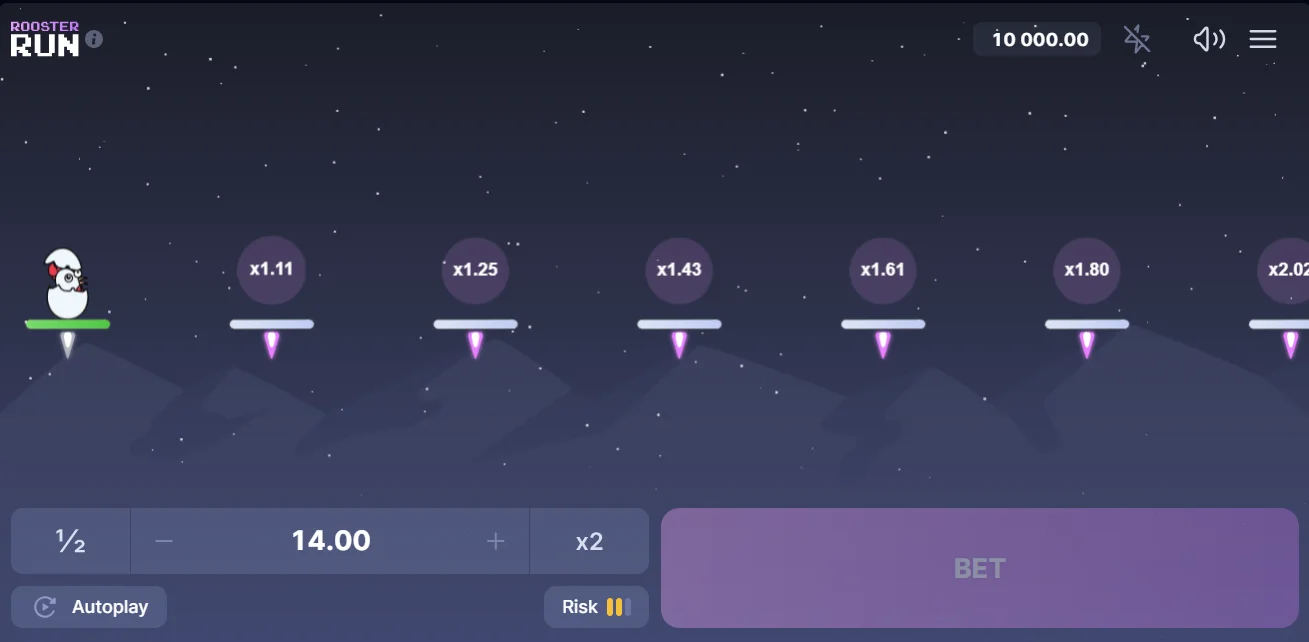
- Choose your stake
Enter the amount you want to wager for the round. UK-facing casinos usually allow low stakes in GBP (£), but the exact minimum and maximum depends on the operator. - Select a risk level
Pick Low, Medium, or High Risk. This changes the number of lines and the maximum multiplier available (up to x10,000 on High Risk). - Place the bet
Press the BET button to start. Once the bet is placed, it cannot be cancelled. - Move forward
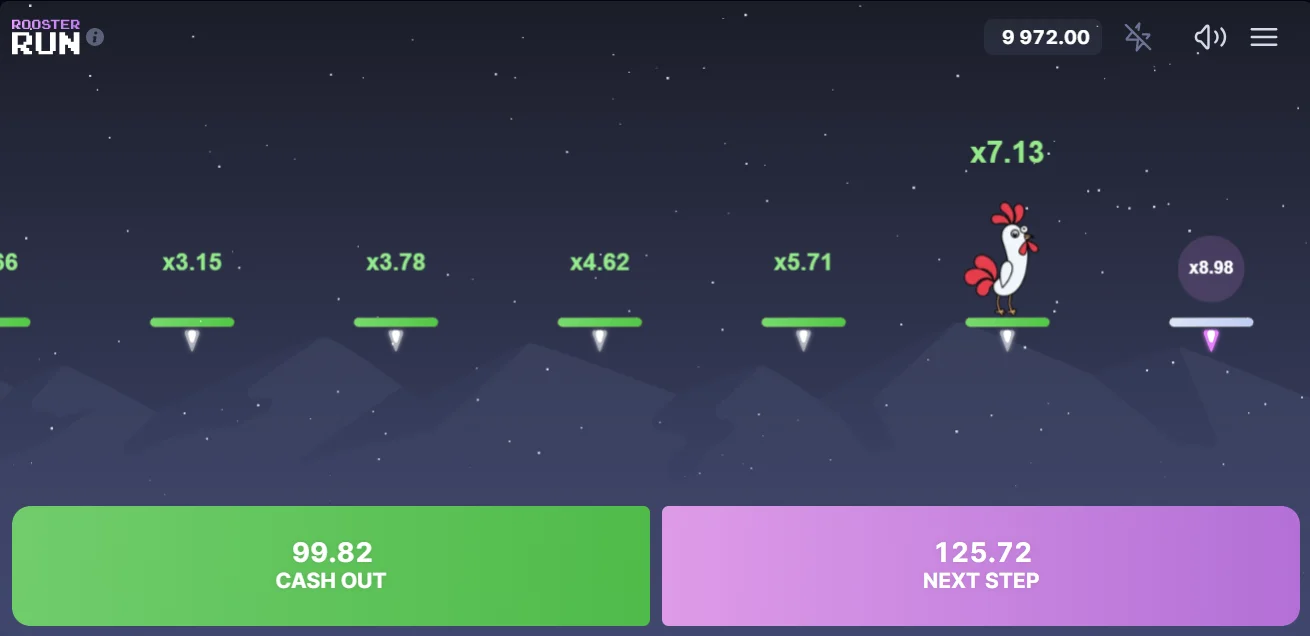
Use FORWARD to make the chicken jump to the next platform and increase the multiplier. - Cash out at the right moment
Press CASHOUT to lock in winnings at the current multiplier and credit them to your balance. - Accept the risk
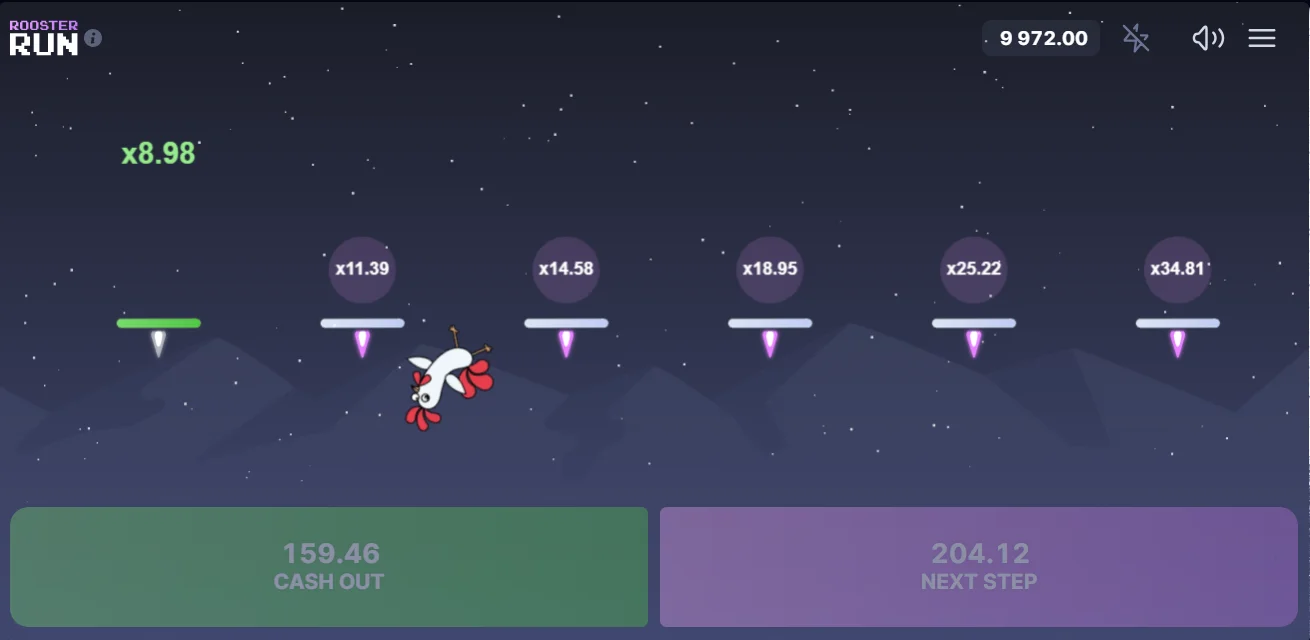
If the chicken slips on a jump, the round ends immediately and the stake is lost.
A practical habit is to set a target before you start — even a modest multiplier — so you’re not making decisions purely on impulse once the run feels “hot”.
Rooster Run rewards discipline and stop points. It’s not about waiting for a bonus; it’s about choosing your exit while you’re still ahead.
Key Features of Rooster Run
Rooster Run keeps the feature set focused. Instead of complex bonuses, the game concentrates on fast decision-making, clean controls, and settings that let you shape volatility. The result is a simple format with genuine tension.
These are the features that define the Rooster Run experience.
Two-Button Decision Flow
After you place a bet, the interface makes your choices obvious: Forward to increase the multiplier, or Cash Out to bank it. There are no hidden mechanics — your winnings come from timing, not from chasing a bonus trigger.
Risk Settings with Clear Ceilings
Low, Medium, and High Risk each come with a different path length and top multiplier. Low Risk tops out at x21.49, Medium Risk can reach x2287.23, and High Risk offers up to x10,000. You can switch settings between rounds to match your mood and bankroll.
Autoplay and Auto Cash-Out Tools
Rooster Run includes autoplay options that let you set a number of rounds, choose a target multiplier, and apply stop conditions based on balance movement. You can also choose step-by-step autoplay (with pauses) or an instant attempt at the target.
Social Tables and Rankings
The mode includes an “All Bets” view for the current round, a yearly “Top” list for the biggest wins, and a “My Bets” tab for personal history. There is also a ranking system tied to total wagered amount in Rooster Run, unlocking cosmetic customisations.
Browser Play on Desktop and Mobile
The game is designed to run directly in a browser with responsive controls. That makes it suitable for quick sessions on the move, without downloads, installs, or heavy loading screens.
Rooster Run does not rely on classic slot extras like free spins. The “feature” is the round itself: how far you dare to go before you lock in.
Rooster Run Demo Mode
The Rooster Run demo lets you play with virtual credits instead of real money. It’s the safest way to feel the pace, test your cash-out instincts, and compare how each risk level changes the run — without risking your own GBP (£).
In demo mode, you can explore the full core loop:
- Low, Medium, and High Risk settings,
- the same jump-by-jump multiplier growth,
- and the same Cash Out / Forward decisions.
The only difference is that demo winnings are not withdrawable, because the balance is not real.
Why the Demo Is Worth Using
The demo is especially useful if you want to:
- learn how quickly a “safe” run can turn,
- compare Low vs High Risk behaviour,
- practise setting sensible cash-out targets,
- test autoplay settings before using real money.
For many players, demo time reduces impulsive decisions once they switch to real-money play.
How to Access the Demo
Most UK-facing casinos that offer Rooster Run load the demo directly in your browser. In many cases you can try it without registering or depositing. It should work on both desktop and mobile, making it ideal for quick test sessions before you commit any money.
Playing Rooster Run on Mobile
Rooster Run is built for quick mobile play and runs smoothly on phones and tablets through your browser. You don’t need to download an app to play, and there is no official standalone Rooster Run application in the App Store or Google Play. If you see an “app”, it’s usually just a shortcut to a casino site.
Mobile Features
The mobile version typically includes:
- all risk settings (Low/Medium/High),
- instant Cash Out and Forward controls,
- demo and real-money modes (where offered),
- fast loading and touch-friendly layout.
This makes Rooster Run a strong choice for short sessions without using storage space or installing extra software.
Pros and Cons of Rooster Run
Rooster Run has obvious strengths, but it also comes with limitations that matter if you prefer slower gameplay or predictable outcomes. Knowing both sides helps set expectations and reduces frustration.
Pros
Cons
Overall, Rooster Run is best for players who enjoy quick decisions, short rounds, and a clear risk-versus-reward trade-off rather than bonus hunting.
Tips for Playing Rooster Run Safely
Rooster Run is random, so there is no guaranteed method to win. However, a few habits can help you control risk, avoid tilt, and keep the game within your budget — especially when playing in GBP (£).
- Keep stakes sensible
Choose a bet size that still feels comfortable after several losses in a row. Crash games can swing quickly. - Start on Low Risk
Use the longer path to learn the rhythm and practise cashing out without chasing “just one more”. - Set a target before betting
Pick a multiplier goal in advance and treat it like a rule. It helps reduce emotional decisions mid-run. - Don’t chase losses
Raising your stake after a bust is one of the quickest ways to lose control of your session. - Use autoplay carefully
If you enable autoplay, set stop conditions (up/down balance) so you don’t leave it running blindly. - Take breaks
If you feel rushed or stressed, step away. Fast games can encourage impulsive choices if you play on autopilot.
These tips won’t change the randomness, but they can keep the experience enjoyable and reduce the chances of blowing through your bankroll in minutes.
Is Rooster Run Worth Playing?
Rooster Run is a modern crash-style casino game that strips everything down to timing, nerve, and risk control. It replaces slot complexity with a clean loop: place a bet, build a multiplier jump by jump, and decide when to cash out before the run ends.
For UK players, it works best as a short-session game. It loads quickly, plays smoothly on mobile, and doesn’t require learning paylines or bonus rules. The risk selector is a strong feature because it lets you choose between calmer Low Risk play and high-volatility High Risk attempts.
Demo mode (when available) is a big advantage, because you can practise the psychological side — when to stop — without pressure. Real-money play in GBP (£) adds excitement, but it also demands discipline, especially when using High Risk or autoplay targets.
Overall, Rooster Run is worth trying if you enjoy:
- fast rounds,
- full control over cash-outs,
- and a clear risk-versus-reward structure.
If you prefer slow gameplay, long feature hunts, or predictable pacing, a classic slot or table game may fit better.
Rooster Run FAQ

Thomas Brooks
Thomas Brooks is a 35-year-old English writer and game reviewer. He specializes in testing online casino games, including slots, table games, and live dealer formats. Thomas analyzes gameplay mechanics, bonuses, RTP, and user experience, then writes clear and unbiased reviews for players. He also follows trends in the iGaming industry, compares platforms, and helps users choose reliable and entertaining gaming services.