
Chicken Rough – Real Money Crash Casino Game for UK Players
Chicken Rough is a rapid-fire crash-style casino game where each safe move pushes your multiplier higher, but a single hit ends the run and wipes your stake. There are no reels, paylines, or bonus hunts here — you’re in charge of how far the chicken goes and exactly when you decide to cash out.
On this page, you’ll find the essentials UK players look for before jumping in: where Chicken Rough is available, how the risk setting changes the pace, what the step-by-step multiplier system feels like, and how to try a demo before playing with GBP (£). If you like quick rounds, instant choices, and a clear risk-versus-reward setup, Chicken Rough delivers the tension in seconds.

Where to Play Chicken Rough in the UK
Picking the right casino matters just as much as understanding the rules. Chicken Rough isn’t always shown in every lobby, and the smoothest experience comes from sites that are upfront about licensing, payments, limits, and responsible gambling support.
A good Chicken Rough casino for UK players should tick these boxes:
- Licensed and regulated, with visible operator information and responsible gambling tools.
- Accessible from Great Britain, with real-money play and deposits shown in GBP (£) where available.
- Demo support, so you can learn the rhythm without risking a penny.
- Trusted payment methods, with clear withdrawal processing times.
- Mobile-friendly gameplay, running directly in your browser.
- Clear terms and conditions, without confusing wagering clauses or hidden fees.
With a solid UK-facing platform, Chicken Rough feels cleaner and less stressful — especially if you want fast loading, responsive controls, and straightforward cash-outs when you hit your target.
What Is Chicken Rough?
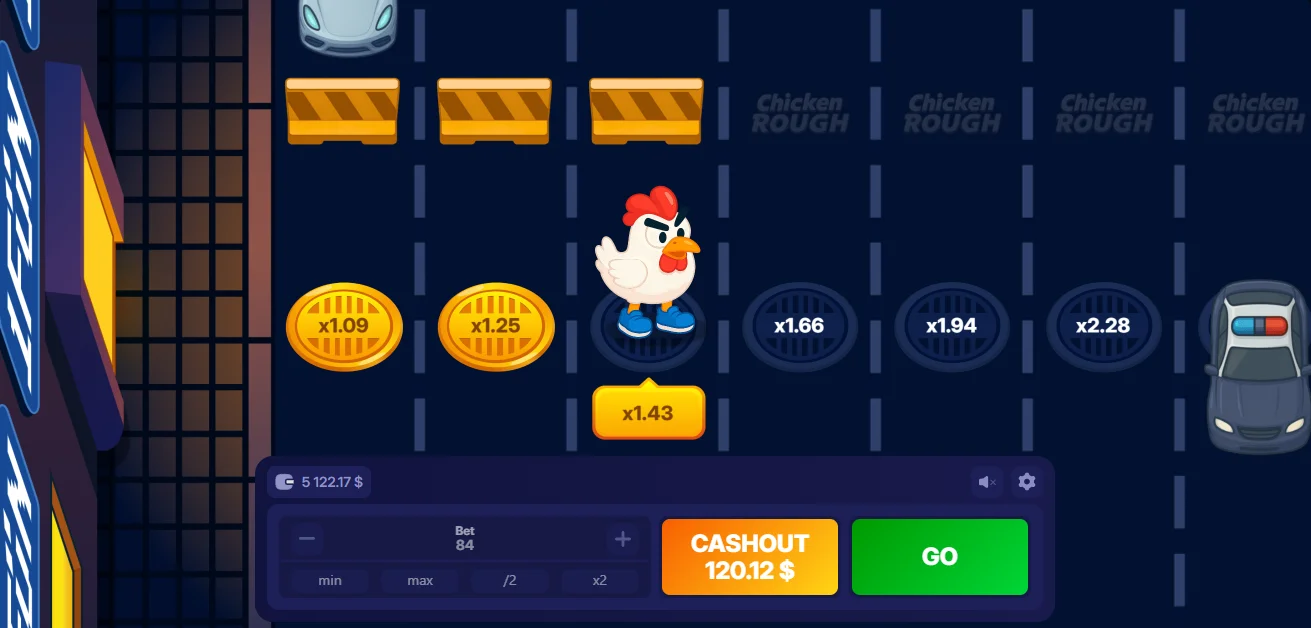
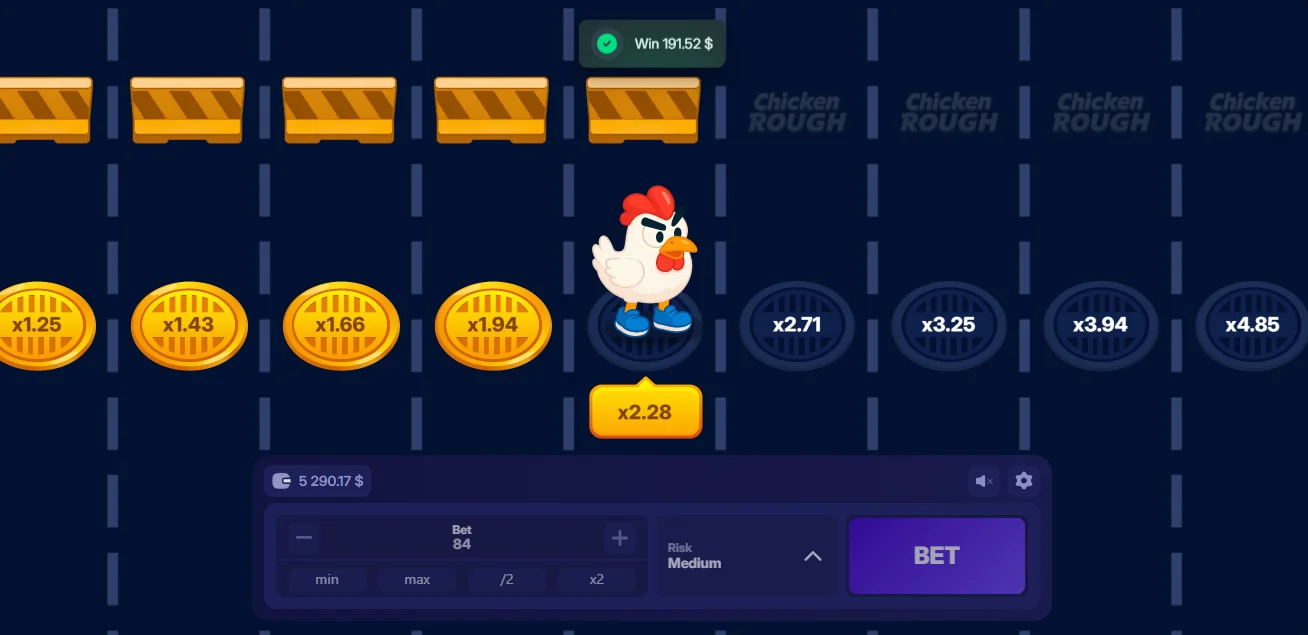
Chicken Rough is an arcade-style crash casino game built around a simple idea: guide a cartoon chicken across a busy road, lane by lane, while your multiplier climbs with each safe step. You’re never locked into a fixed round length — the run continues for as long as you keep surviving and choose not to cash out.
Unlike traditional slots, there’s no waiting for symbols or bonus triggers. You place a stake, select a risk level, and then decide whether to push forward for a stronger multiplier or end the round and bank the payout. The game feels more like a quick reflex-and-nerve challenge, even though outcomes are still random.
Visually, Chicken Rough keeps things clean and readable: the road is split into clear lanes, multipliers are shown as you progress, and the action is fast enough for short sessions. Most rounds take only moments, which makes it easy to play casually — or burn through a balance quickly if you chase big jumps.
For UK players, Chicken Rough is usually offered in-browser on both desktop and mobile, with stakes and withdrawals handled by the casino. Many sites also provide a demo mode, so you can test the pacing and risk options before switching to real-money play in GBP (£).
Chicken Rough – Key Facts
- Game provider: 1Fun
- Game type: Crash / arcade casino game
- RTP: 96%
- Volatility: Adjustable (risk-based)
- Maximum multiplier: Depends on the game build
- Maximum win: Often capped by casino rules
- Bet range: Commonly from £0.01 up to £100+ (casino-dependent)
- Difficulty levels: Risk options (e.g., Low / Medium / High)
- Demo mode: Often available
- Real money play: Supported (GBP £ where offered)
- Platforms: Desktop & mobile (browser-based)
- Download required: No
How Chicken Rough Works
Difficulty Levels & Risk System
One of the best parts of Chicken Rough is how easily you can adjust the risk before each round. The game typically offers simple risk options (such as Low, Medium, and High), and each one changes both the pace of the multiplier and the likelihood of losing early.
Lower risk is designed for steadier play and smaller swings, while higher risk pushes volatility to the front — faster growth, but more frequent busts. Because you can switch settings every round, it’s easy to adapt your approach depending on your balance, mood, and how aggressive you want the next run to feel.
Low Risk
Low risk is the safest setting and a sensible starting point if you’re new to the game. The chances of the run ending on each step are lower, and the multiplier tends to rise at a calmer pace.
This option suits players who prefer:
- longer, less intense sessions,
- smaller wins that land more often,
- and fewer sharp losing streaks.
It’s also ideal for learning the main trap of the game: staying in for “one more lane” when you’ve already got a profit.
Medium Risk
Medium risk sits in the middle. The multiplier tends to build faster than on Low, but the chance of getting wiped out becomes more noticeable as you keep pushing forward.
This setting is popular with regular players who want:
- a blend of caution and excitement,
- reasonable cash-out goals,
- and a quicker pace without extreme swings.
For many UK players, Medium feels like the most “natural” version of Chicken Rough.
High Risk
High risk is where volatility takes over. Runs tend to end sooner on average, and multiple losses in a row can happen quickly. In return, successful runs can reach meaningful multipliers in very few steps.
This option suits players who:
- enjoy fast outcomes,
- accept frequent busts,
- and chase occasional strong hits over steady progress.
It’s not ideal for careful bankroll building, but it’s the setting that delivers the biggest adrenaline rush.
Extreme Play (When Offered)
Some versions and casinos add an extra-aggressive mode beyond High risk. The multiplier ramps up quickly, but the chance of losing on any given step becomes harsh, so most runs end fast.
This style is designed for:
- high-risk players,
- short, punchy sessions,
- and rare attempts at big multipliers.
Used too often, it can drain a balance quickly — so it’s best treated as an occasional “swing” mode.
Multipliers, RTP & Winning Potential
In Chicken Rough, the payout is driven by two things: how many safe lanes you clear and how quickly the multiplier grows on your chosen risk level. There are no fixed prizes, paylines, or jackpots — every result is built around your decision to bank a number now or risk the stake for a better one.
Because casinos may offer slightly different versions, exact RTP details aren’t always displayed the same way across platforms. In general, lower-risk settings are designed to feel steadier, while higher-risk settings concentrate value into rarer, larger outcomes. That’s why sessions can swing quickly even if the rules look simple.
In practical terms, Chicken Rough is best treated as a volatility game. You’re not “due” a long run, and you can’t read patterns from previous rounds. The main skill is managing your own exit point — and staying disciplined when the multiplier starts climbing.
How to Play Chicken Rough – Step-by-Step Guide
Chicken Rough is easy to start and quick to understand. Every round comes down to a single question: take the payout you’ve built, or risk another lane for a higher multiplier.
Use these steps to get going:
- Choose your stake
Set the amount you want to bet for the round. Many casinos allow very low stakes, with higher limits depending on the operator. - Select a risk level
Pick Low, Medium, or High (and any extra mode offered). This controls how aggressive the game feels and how fast the multiplier builds. - Start the round
Press BET/Play and the run begins. The multiplier appears immediately and updates as you progress. - Move lane by lane
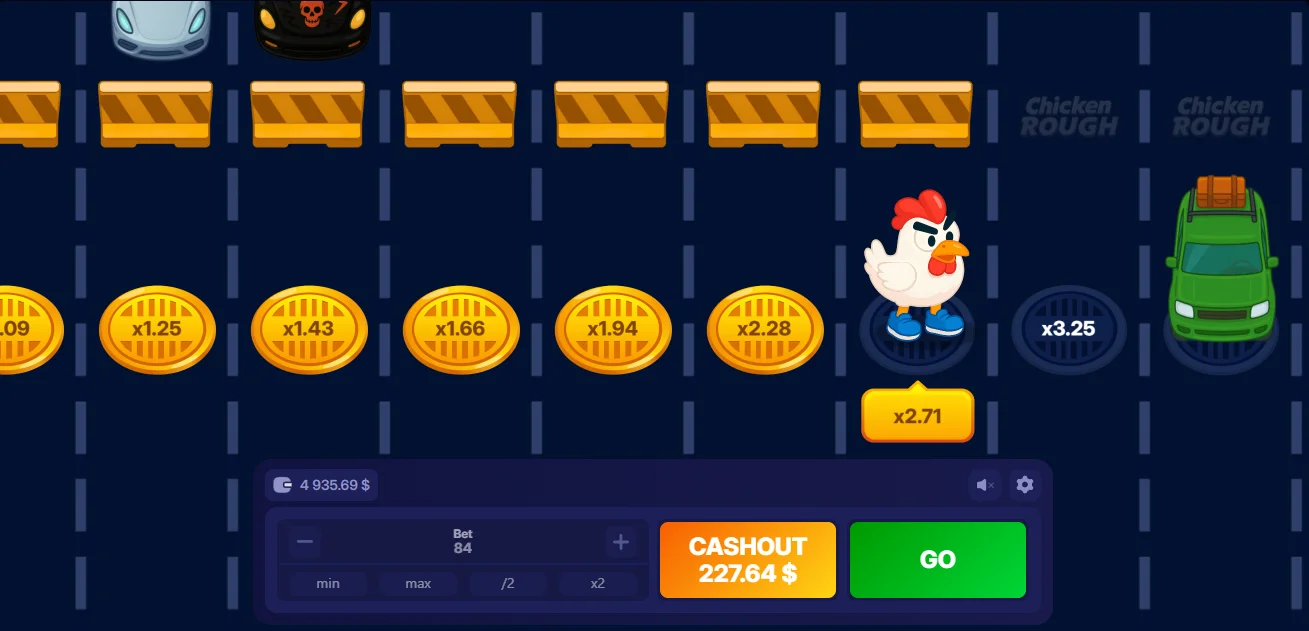
Each successful lane increases your multiplier and your potential payout. - Cash out when you’re happy
Hit the cash-out button at any point to lock in the current multiplier. - Avoid the hit
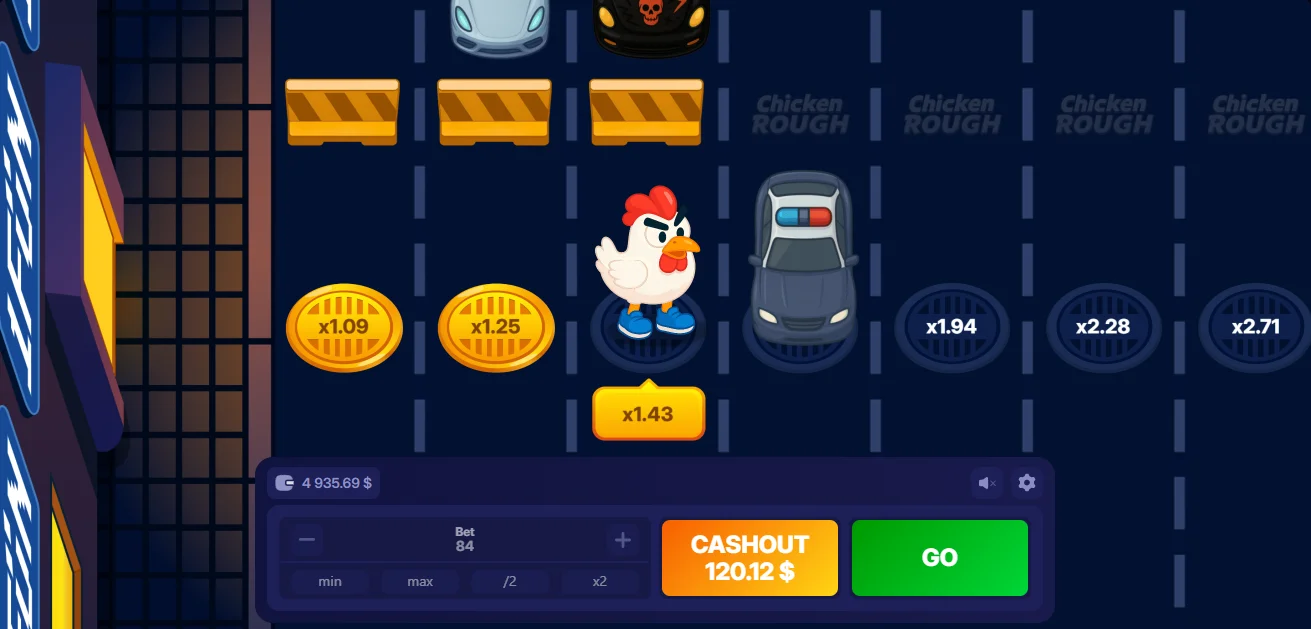
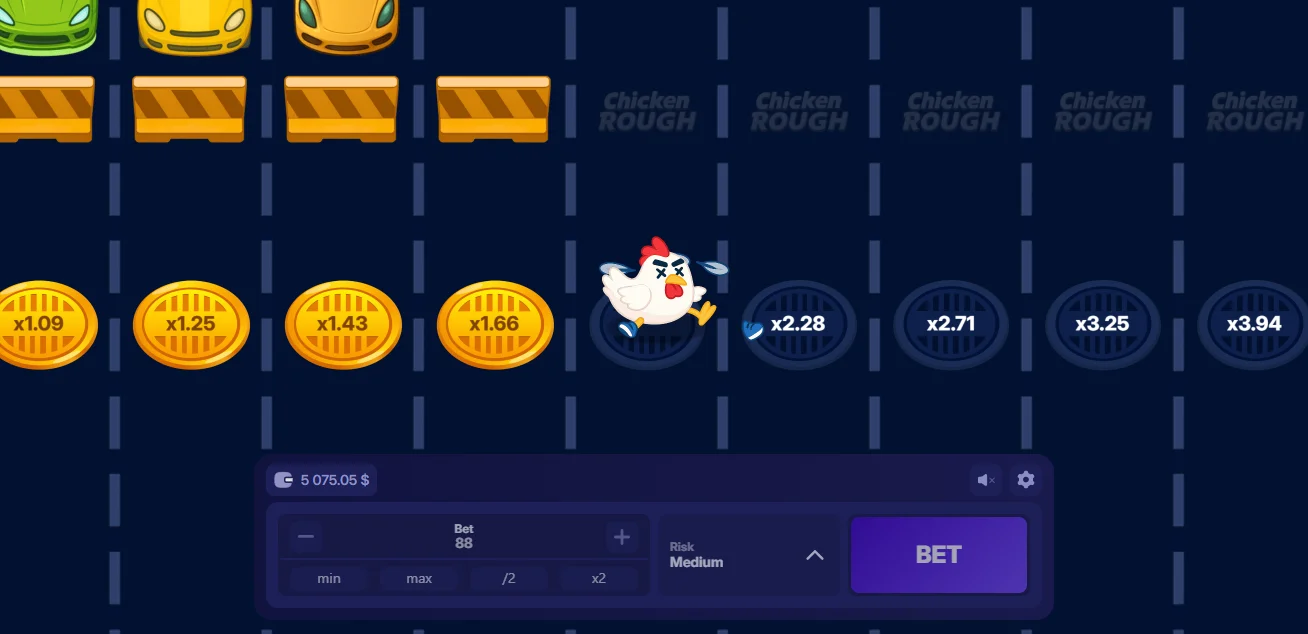
If you get caught by a car, the round ends instantly and you lose the full stake.
The smartest habit is setting an exit point before you start. The longer you stay in the run, the better the payout can look — but the risk doesn’t switch off, and it only takes one bad moment to lose the stake.
Chicken Rough doesn’t reward “waiting it out” like some slot sessions. It rewards timing, restraint, and knowing when enough is enough.
Key Features of Chicken Rough
Chicken Rough keeps the feature set focused rather than crowded. Instead of stacking lots of mini-bonuses, it centres the whole experience on one core loop: build a multiplier, decide your exit, and accept the risk of going one step further.
These are the features that define how the game feels in real play.
Instant Cash-Out Control
You can cash out during any successful run, whenever you choose. That gives you direct control over when the round ends and what payout you take. Nothing is forced, and there’s no automatic “best time” — you decide when to lock it in.
Simple Risk Settings
Before each round, you select the risk level. Lower risk supports steadier play, while higher risk is built for faster multipliers and quicker busts. Switching settings is instant, so you can change your style without changing games.
Arcade Road-Crossing Theme
The visuals make the stakes obvious: you’re crossing lanes with moving cars, and every step forward feels like a decision. It’s a familiar arcade setup that keeps the action easy to follow, even on a small mobile screen.
High Multiplier Tension
Even short runs can produce a noticeable multiplier, which creates constant temptation to continue. That tension — profit on the table versus one more lane — is what makes Chicken Rough addictive in short bursts.
Fast Rounds and Minimal Clutter
Rounds are quick, the interface is clean, and the feedback is immediate. There’s no long animation cycle to sit through, and the game runs smoothly in-browser on both desktop and mobile.
Chicken Rough doesn’t rely on classic slot bonuses like free spins. The “bonus” element is the core mechanic itself: knowing when to stop before the run ends.
Chicken Rough Demo Mode
The Chicken Rough demo lets you play with virtual credits instead of real money. It’s the easiest way to learn how the lanes, multipliers, and cash-out timing work, without risking your own balance.
In most demo versions, you can test the full experience:
- the same risk options,
- the same multiplier growth,
- and the same cash-out decision points.
The difference is simple: demo winnings aren’t real and can’t be withdrawn.
Why the Demo Is Worth Using
The demo is especially useful if you want to:
- get used to the speed of the rounds,
- compare Low, Medium, and High risk behaviour,
- practise setting sensible cash-out targets,
- and reduce impulsive decisions before playing for real.
For many players, a few demo runs make real-money sessions feel calmer and more controlled.
How to Access the Demo
On many UK-facing sites, the demo loads directly in your browser with no download required. In most cases you don’t need to register just to try it, which makes it perfect for a quick test on both desktop and mobile before you deposit and play in GBP (£).
Playing Chicken Rough on Mobile
Chicken Rough is well suited to mobile play because rounds are short and the controls are simple. You can launch it straight in your browser on a phone or tablet without installing an app. There isn’t an official standalone Chicken Rough application in the App Store or Google Play — any “app” you come across is usually just a link that opens a casino website.
Mobile Features
The mobile version typically includes:
- the same risk settings,
- cash-out at any time,
- demo and real-money modes,
- fast loading and touch-friendly play.
That makes it ideal for short sessions without taking up storage space or dealing with downloads.
Pros and Cons of Chicken Rough
Like any casino game, Chicken Rough has clear strengths as well as a few drawbacks. Knowing both helps set expectations and keeps the experience enjoyable rather than frustrating.
Pros
Cons
Overall, Chicken Rough is best for players who enjoy quick rounds, clear choices, and visible risk — rather than long bonus features or slow, predictable gameplay.
Tips for Playing Chicken Rough Safely
There’s no guaranteed way to win in Chicken Rough because each round is random. Still, a few practical habits can help you manage risk and avoid the most common mistakes crash-game players make.
- Keep your stake sensible
Choose a bet size that won’t sting if you lose several runs in a row. Higher risk modes can swing hard. - Start on lower risk
Low and Medium risk are better for learning the pacing and getting used to how fast a run can flip. - Pick a cash-out target before you press BET
Decide what multiplier you’ll take and try to stick to it. Discipline matters more than “confidence”. - Don’t chase losses
Raising your stake after a bust is one of the quickest ways to lose control of your session. - Use demo mode for practice
Test different risk settings and targets with virtual credits before switching to real money. - Take breaks
Fast rounds can lead to rushed decisions. If it stops being fun, step away and reset.
These tips won’t change the randomness of the game, but they can help you stay calmer, play within your limits, and treat Chicken Rough as entertainment — not a money plan.
Is Chicken Rough Worth Playing?
Chicken Rough is a modern crash-style casino game built for fast decisions and obvious risk. It strips away most of the complexity you see in slots and replaces it with one clean mechanic: how far will you push the run before you cash out?
For UK players, it works best as a short-session game. It loads quickly, plays smoothly on mobile, and doesn’t require learning complicated features. The risk settings also make it flexible — you can keep it calm with lower risk or turn up the volatility when you want sharper swings.
Demo mode is a real advantage because it lets you practise timing without pressure. Real-money play in GBP (£) adds extra tension, but it also demands discipline — especially on higher risk, where runs can end in seconds.
Chicken Rough is worth trying if you enjoy:
- quick rounds,
- full control over cash-outs,
- and a clear risk-reward structure.
It’s less suitable if you prefer long bonus features, slow pacing, or more predictable session flow.